
 Trending in India
After 30 Years Studying The Kamasutra, I Found The One Part Of Your Kundali That Once Made The Moon Return — And No Astrologer Ever Taught You To Use It.

 ✨ Show Me Mohini Itr · From Rs. 999 Rs. 2,49930-day money-back · Free discreet shipping · COD available
Namaste. My name is Dr. Vasudha Sharma.
For the last 30 YEARS I have studied one book — the Kamasutra — and the Vedic feminine arts the world quietly forgot.
In that time I have sat with over 1,100 Indian women — single, in love, married, divorced, in their 20s through their 50s. Almost all of them carried the same wound: a chart was handed more power over their love life than they were.
- My kundali "didn't match" — and a man I loved was taken from me over it.
- They called me manglik. Suddenly every family went quiet.
- The astrologer told my mother I'd "marry late," or "never find peace."
- Biodatas that seemed perfect went silent the moment they saw my horoscope.
- "Your shelf life is reducing" — from a relative I love. More than once.
- None of it counts — not my degree, not my work, not who I am. A chart decides.
I have heard it all — from "none of my credentials matter, I'm rejected over a chart"… all the way to women told by an astrologer they would simply "never find peace."

It wasn't until last year that I finally cracked the code — not to changing anyone's chart, but to becoming the woman a room turns toward, chart or no chart.
Shukra — The Planet They Read, But Never Teach You To Wear.

In Jyotish, one graha rules love, beauty, charm, and the simple pull of being drawn toward someone: Shukra — Venus.
Your astrologer reads your Shukra to predict. What almost none of them tell you is that the old texts didn't only read it. They treated charm as something a woman could cultivate, carry, and wear.
Here is what almost no astrologer connects for you: in Jyotish, the sixty-four arts — the chausath kalā — all belong to one graha. Shukra. Music, dance, conversation, poetry, the making of garlands — Venus rules them all. Shukra is the karaka, the significator, of beauty, charm and the arts. And among those Venusian arts is the most personal of them all.
Vatsyayana, the sage who compiled the Kamasutra, named it — gandhayukti, the art of perfume, a Shukra art. Beyond looks, body and beauty, he wrote, nature gave a woman one more way to draw a partner close — the most powerful of all.
The old sky knew it too. Chandra, the Moon, was wed to twenty-seven stars — and yet, night after night, he returned to only one:

Not the loveliest of the twenty-seven — simply the one he could not stay away from. The art of carrying that same pull has a name — GANDHAYUKTI — Shukra's own art, one of the sixty-four she rules. Modern science calls the signal one word:
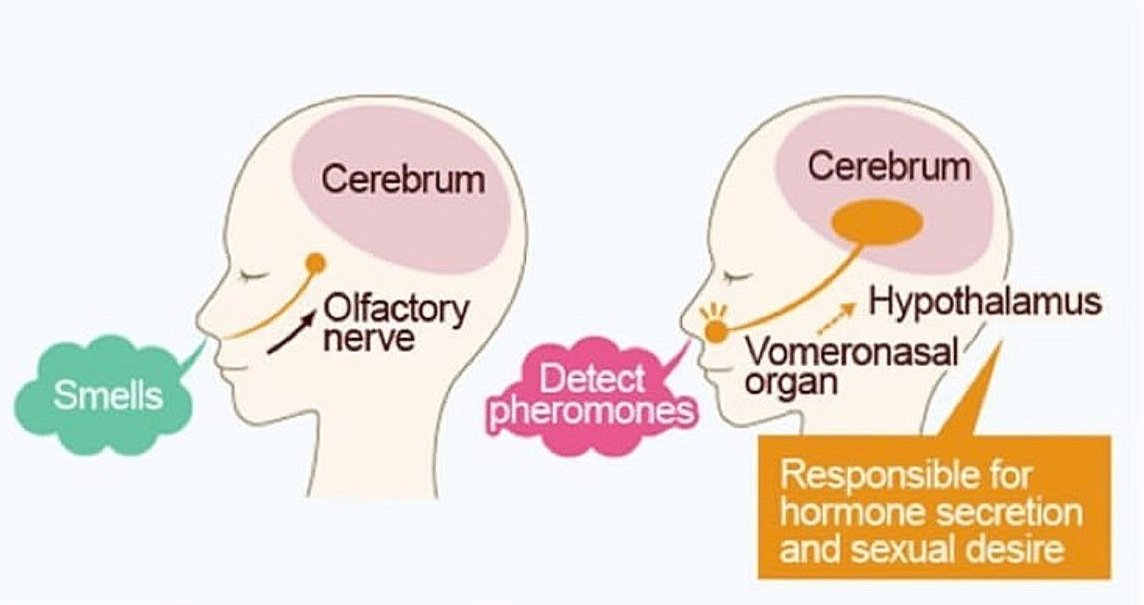
The Science Of Scent Won A Nobel Prize In 2004.
In 2004, Richard Axel and Linda Buck won the Nobel Prize in Physiology or Medicine for discovering how scent works — the receptors that let us recognise and remember thousands of smells.
What they confirmed is exactly what the Venusian art always knew. Scent reaches the limbic system — the brain's seat of emotion and memory — before the rational mind catches up. It's why one scent can bring back a feeling, or a person, in 0.3 seconds, faster than any photograph.
Shukra understood it 2,200 YEARS before the Nobel committee gave it a name. A scent isn't decoration. It's memory — how you're remembered long after you've left the room.
But Here Is The Bad News.
Even though this signal has existed for 200,000 years, the Gandhayukti formula was quietly lost in India — generation after generation.
And in its place grew an industry that profits from your fear. The gemstone. The pooja. The yagya. The "one more remedy," each costing a little more than the last. As so many women have told me: "Pay him 10,000 — it's a business."
They are not wrong. Fear is the most profitable thing a remedy-seller can price. And there is one truth nobody with a fee to charge ever says out loud:

The cousin who walks into the wedding hall and the room quietly lifts. The friend at the reunion everyone drifts toward. The colleague every man finds three reasons a week to speak to.
You know exactly who I mean.
If a chart has been allowed to decide your love life — if you've been told to wait, to fear, to "fix" your dosha — the truth is simpler than they made it sound: no one ever taught you the one part of your chart you were meant to use. Shukra was never a verdict. It was a signal — and the signal can be learned.
It isn't your face. It isn't your body. It isn't your chart.
Rohini was simply the one who carried the signal Shukra gives — the one the Moon could not stay away from. No one taught you how, so it went quiet. Learn it — and you become the one a room remembers.
So What Is The Solution?
The Kamasutra is the only ancient text in the world that named this art directly — not as superstition, but as craft. And in Jyotish, the art it named belongs to Shukra.

The One He Returns To. Not by changing your chart. By wearing what it could never measure.
The art is called Gandhayukti — the Venusian art, the one Shukra rules. Specific botanical ingredients. Specific ratios. Blended the slow way the old perfumers did — to carry a woman's natural Shukra signal at its strongest.

Remember Rohini — the one the Moon returned to? Here is the whole of it. Chandra, the Moon, was married to the twenty-seven nakshatras, the daughters of Daksha. Twenty-seven wives. And still, night after night, he returned to only one: Rohini.
The texts never say she was the most beautiful of the twenty-seven. They say only that there was something about her the Moon could not stay away from — a presence the others could not name and he could not resist. He kept choosing her. Again, and again, and again.
That is the whole longing, isn't it? Not to be admired once. To be the one he returns to — chosen on a Tuesday and a Thursday and a slow ordinary evening, long after the wedding photos are old.
Rohini was not chosen for a chart. She was chosen for the thing a chart could never measure — the way a room rearranges itself when she walks in.
That formula has not been hand-distilled in India for 200 YEARS.
Until last year — when I went to Kannauj.
So I Went To Kannauj — India's Perfume Capital.

For over 1,200 years, the itr of India's royal courts came from this one small town in UP — long before the factories, long before the alcohol perfumes.
But when I arrived in 2024, the craft was dying:
Only 28 master perfumers left in all of India. Their sons had moved to Bangalore. The Gandhayukti formula was about to be lost forever.
The Family That Has Distilled Here For 13 Generations
I walked into his workshop that day.

Here's what nobody outside Kannauj knows.
His family has hand-distilled itr in this very workshop for 13 generations — the Gandhayukti method passed father to son, the same stills, the same patience, long before any of it was written down for the rest of us.
13 GENERATIONS, an unbroken line, from the old courts to today.
I asked him to help me bring the lost formula back. He thought for a long time. Then he said:
We started the next morning. It took 7 MONTHS:
The 85th batch was the one.
The Gandhayukti formula the texts described — the Venusian art Shukra rules. Lost for 200 years — back at last.
Introducing Mohini Itr — The Queen's Signature Scent.
The warm anchor. The ranis of old wore it before the durbar. Stays close to the skin and lingers all day.
A trace fragrance note studied in modern scent research. Adds the warm, skin-close depth that makes a scent feel personal rather than "perfumey."
The romantic top note — soft, glowing, the first thing anyone notices when you walk into a room.
The deep, sensual woody note. Turns "she smells lovely" into "I don't want to step away."
Warms with your body and grows richer as the evening goes on.
The calm, magnetic base. Carries the blend for 8+ hours. No headaches.

How To Wear It — The 4-Drop Ritual.
Four drops. Thirty seconds — ideally as your Shukravar habit each Friday, Venus's own day. Here's what unfolds through the day:
The same ritual the ranis of old kept for themselves — the Venusian art Shukra rules, the one the Kamasutra named among her sixty-four. Lost for 200 years, until now.
What 4,127 Indian Women Are Writing In.
Three reviews from this month. Permissions taken. Names real. Individual experiences vary.
"My family took my horoscope to five astrologers. All five said it was a bad match. Six months of being told a chart knew my life better than I did. I almost gave him up.
I started wearing Mohini — not to change anyone's mind, just to feel like myself again instead of a problem to be fixed. Something shifted in how I carried myself. I stopped shrinking in those meetings.
We're getting married this winter. I stopped asking a chart for permission to be chosen."


"Manglik. The word followed me through every biodata. Men who seemed keen would go quiet the moment the kundali was sent. I'd spent more on poojas and stones than I want to admit.
A friend gifted me Mohini. I didn't expect a perfume to do anything — but for the first time in years I felt magnetic instead of marked. I walked into rooms differently.
I'm not telling you a bottle fixed my chart. I'm telling you I stopped letting a chart tell me what I'm worth."


"I grew up being told my 'shelf life' was reducing. An astrologer once told my mother I would marry late and 'never find peace.' I half-believed it for years.
I wore Mohini to my cousin's wedding — three drops, that's all. I cannot fully explain it, but I walked in differently. Two people asked what I was wearing. Someone I'd known for years suddenly couldn't stop talking to me.
I went home and cried — the good kind. A chart doesn't get to decide who I am."


GRAZIA · ELLE INDIA
Let me tell you exactly what it costs ↓
Just Imagine — 90 Days From Now.

How To Get Your Hands On Mohini Itr.
Each batch takes 30 days minimum to hand-distill in Pandit Aarav's copper deg-bhapka. We cannot rush the process.
Women who try Mohini buy multiple bottles — for sisters, best friends, daughters, mothers. Our stock runs out quickly every batch.
Authentic Kannauj itrs sell for ₹3,000 – ₹8,000 a bottle. Mohini's retail price should be ₹3,499. I am not a businesswoman. I am a scholar. So I am offering a launch discount of up to 70% OFF.
⚡ Launch Sale Live Now.


This is the lowest price we will ever offer.
You will never buy Mohini Itr cheaper than today.
You Have 30 Days To Try Mohini Itr — Completely Risk-Free.
If you don't love how it makes you feel — if you don't catch yourself liking what you see in the mirror, or get a compliment you didn't go looking for — write to hello@theclearfortress.in within 30 days and we refund every rupee.
Individual experiences vary. Mohini is a perfume — a satisfaction guarantee on the product, not a promise of any relationship outcome.
This Is Not Just About You.
When you wear Mohini Itr, three things happen at the same time:
You owe it to yourself — and to the woman a chart once tried to define.
UPDATE — May 28, 2026: Demand for Mohini Itr has jumped. Inventory is moving fast — order before this batch runs out.
Checkout
Money Back
Shipping
Available
NOTE: Mohini Itr is NOT available on Amazon, Nykaa, or Myntra. Only the official site sells the authentic deg-bhapka-distilled bottle.
(with Pandit Aarav Mishra, 13th-gen Kannauj Master Perfumer)